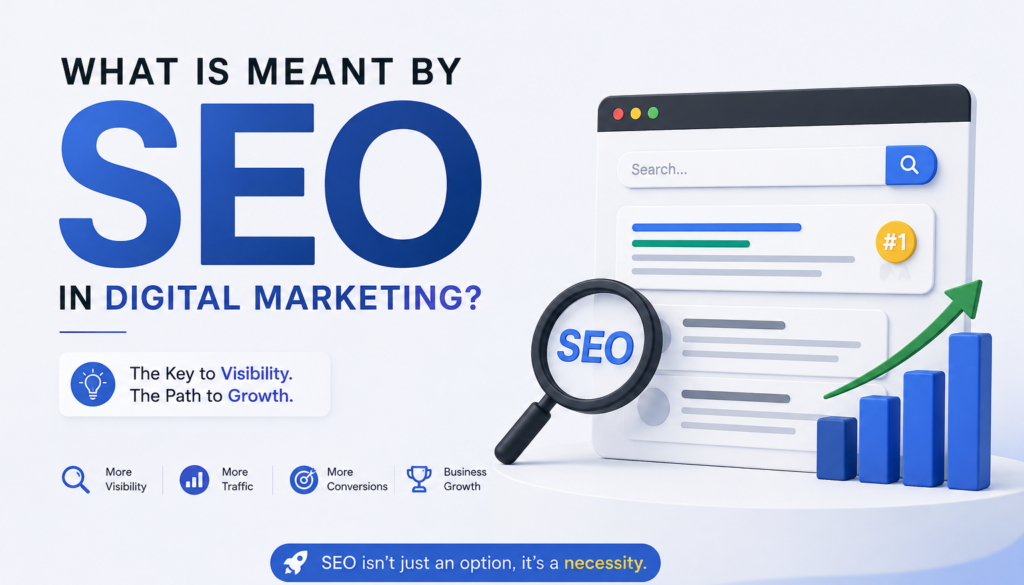
What is meant by SEO in digital marketing ?
What Is Meant by SEO in Digital Marketing?
If you’re new to online promotion, you’ve probably wondered what is meant by SEO in digital marketing. In simple terms, SEO — or Search Engine Optimization — is the practice of improving a website so it ranks higher on search engines like Google. Within the broader world of digital marketing, SEO plays a central role in helping businesses get discovered by the right people at the right time, without paying for every click.
As competition online grows fiercer, understanding this concept has become essential for anyone hoping to build a visible, sustainable brand.
What Is Meant by SEO in Digital Marketing, Exactly?
To fully understand what is meant by SEO in digital marketing, think of it as the process of optimizing your website’s content, structure, and technical setup so search engines can easily find, understand, and rank it. Unlike paid advertising, SEO focuses on earning “organic” — or unpaid — traffic through relevance and quality.
The goal is straightforward: when someone searches for a product, service, or piece of information related to your business, your website should appear as close to the top of the results as possible.
The Key Components of SEO
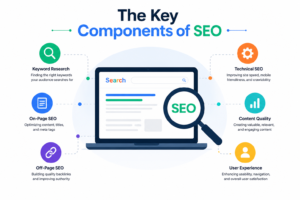
SEO isn’t a single technique — it’s a combination of strategies working together. The main components include:
- On-Page SEO – optimizing content, headings, and keywords within your website pages
- Off-Page SEO – building backlinks and authority from other reputable websites
- Technical SEO – improving site speed, mobile-friendliness, and crawlability
- Local SEO – optimizing for location-based searches, especially useful for small businesses
- Content Optimization – creating valuable, keyword-relevant content that answers user questions
Each component contributes to a website’s overall search visibility and ranking potential.
Why Businesses Need to Understand SEO
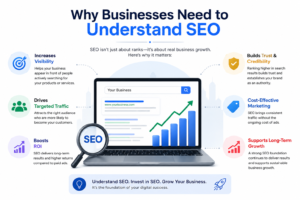
Once you understand what is meant by SEO in digital marketing, it becomes clear why nearly every successful online business prioritizes it. SEO allows companies to:
- Attract consistent, long-term traffic without ongoing ad spend
- Build credibility and trust through higher search rankings
- Reach users actively searching for their products or services
- Improve user experience through faster, well-structured websites
- Achieve sustainable growth compared to short-lived paid campaigns
Unlike paid ads that stop generating traffic the moment a budget runs out, SEO efforts continue delivering value over time.
SEO vs Other Digital Marketing Strategies
While paid advertising and social media marketing can deliver quick results, SEO is a long-term investment. It requires patience, as rankings improve gradually through consistent optimization. However, once a website ranks well, it often maintains that visibility with far less ongoing cost than paid campaigns.
This long-term value is one of the biggest reasons businesses continue to invest in SEO as part of their broader digital marketing strategy.
How to Get Started with SEO
If you’re new to this field, start with keyword research to understand what your audience is searching for. From there, focus on creating quality content, optimizing on-page elements like titles and meta descriptions, and building a technically sound website.
Understanding what is meant by SEO in digital marketing is the first step toward building a website that attracts visitors consistently. As search engine algorithms evolve, staying informed will help you maintain and improve your rankings over time.
Common Myths About SEO
Many beginners misunderstand what SEO actually involves, which often leads to frustration or wasted effort. Here are a few common myths worth clearing up:
- “SEO delivers instant results.” In reality, meaningful ranking improvements usually take several months of consistent effort.
- “Keywords are all that matter.” While keywords are important, search engines also weigh factors like site speed, mobile usability, and content quality.
- “SEO is a one-time task.” Search algorithms change frequently, so ongoing monitoring and updates are necessary to maintain rankings.
Recognizing these misconceptions early can save businesses time and help them set realistic expectations.
Measuring SEO Success
Tracking the right metrics is just as important as implementing SEO strategies. Some of the most valuable indicators include organic traffic growth, keyword ranking positions, click-through rates, and bounce rates. Tools like Google Search Console and Google Analytics make it possible to monitor these numbers over time and adjust strategy accordingly.
Regularly reviewing performance data helps identify what’s working, what needs improvement, and where new opportunities might exist.
Final Thoughts
SEO is no longer optional for businesses that want to remain visible online. By understanding its core components and long-term value, you can start building an organic presence that drives real, measurable growth. Whether you’re managing a small blog or a large e-commerce store, applying these principles consistently will help your website earn the visibility it deserves.