7 Types of SEO: A Complete Guide for Beginners
7 Types of SEO: A Complete Guide for Beginners
Search engine optimization (SEO) is one of the most effective ways to improve a website’s visibility on search engines like Google. However, SEO is not just one activity. It includes several techniques that work together to improve rankings, attract organic traffic, and reach potential customers.
Understanding the types of SEO is important for anyone who wants to build a strong online presence. Each type focuses on a different part of website optimization, from content and keywords to technical performance and local visibility.
In this guide, we will explore the seven major types of SEO and understand how they help websites perform better in search results.
What Are the Different Types of SEO?
The different types of SEO are strategies used to improve a website’s search engine visibility. Each strategy focuses on specific ranking factors and optimization activities.
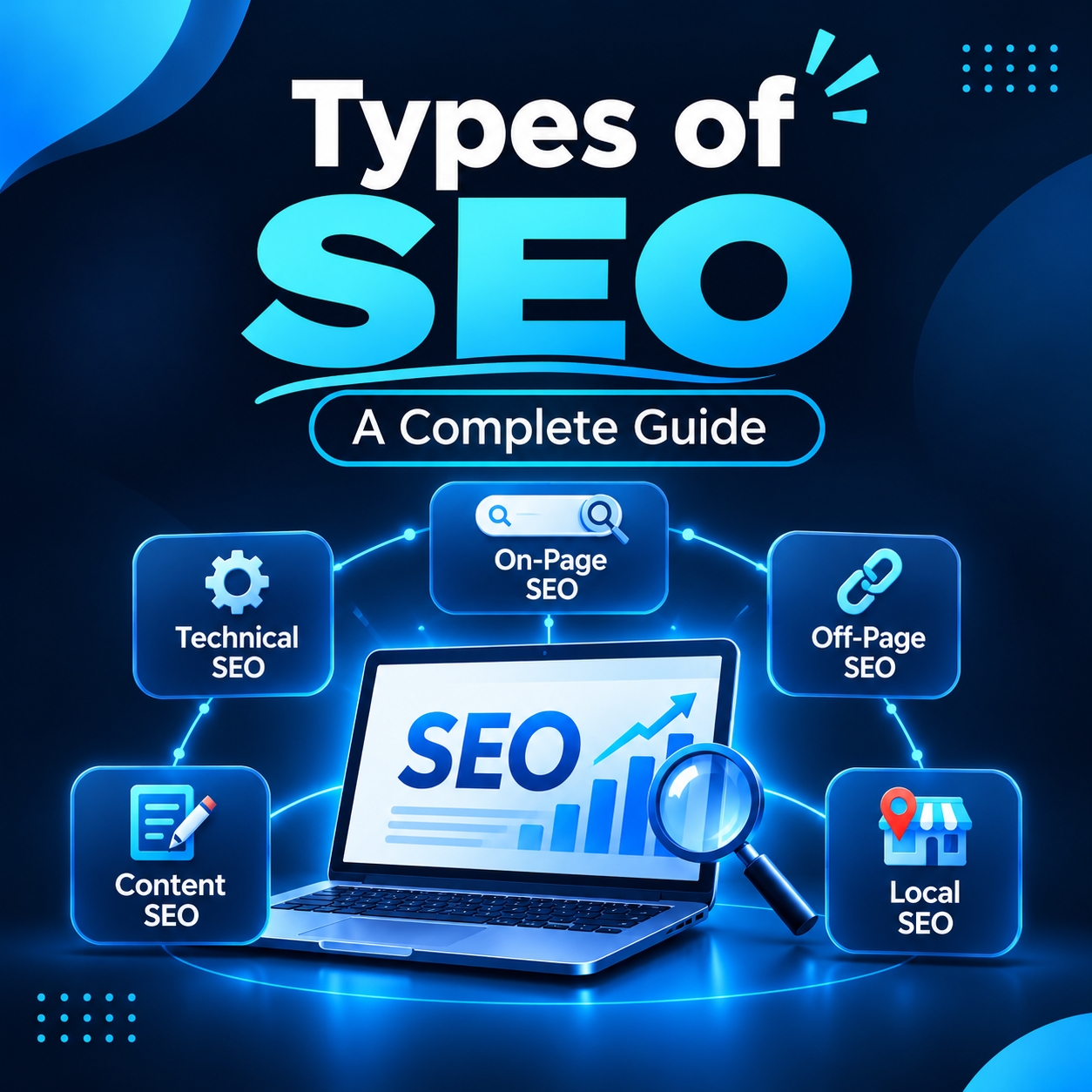
The seven important types of SEO include:
- On-Page SEO
- Off-Page SEO
- Technical SEO
- Local SEO
- E-commerce SEO
- Mobile SEO
- Content SEO
Let’s understand each type in detail.
1. On-Page SEO
On-page SEO focuses on optimizing individual web pages to improve their visibility in search results. It involves improving website content, HTML elements, and page structure.
Important on-page SEO activities include:
- Keyword research and placement
- Optimizing title tags and meta descriptions
- Using proper heading structures
- Adding relevant internal links
- Optimizing images with descriptive alt text
- Creating useful and readable content
For example, if you have a page targeting “website design in Kannur,” you should naturally include that keyword in the page title, introduction, relevant headings, and content.
Proper on-page SEO helps search engines understand what your pages are about.
2. Off-Page SEO
Off-page SEO includes activities performed outside your website to improve its reputation, authority, and visibility.
Backlinks are an important part of off-page SEO. They are links from other websites that point to your website.
Some common off-page SEO techniques include:
- Building relevant backlinks
- Guest posting on industry websites
- Creating shareable resources
- Digital PR
- Brand mentions
- Promoting content through relevant communities
However, not every backlink is valuable. Focus on earning relevant, trustworthy links instead of purchasing large quantities of low-quality backlinks.
3. Technical SEO
Technical SEO focuses on improving the technical structure of your website so search engines can crawl, understand, and index your pages effectively.
Even high-quality content may struggle to perform if search engines cannot properly access or understand your website.
Important technical SEO activities include:
- Improving website loading speed
- Creating an XML sitemap
- Configuring robots.txt correctly
- Fixing broken links
- Implementing HTTPS
- Improving mobile usability
- Resolving indexing issues
- Optimizing Core Web Vitals
Tools like Google Search Console and PageSpeed Insights can help identify technical problems and monitor website performance.
4. Local SEO
Local SEO helps businesses improve their visibility in location-based searches.
It is particularly important for businesses that serve customers in specific cities, towns, or regions.
For example, someone searching for “digital marketing strategist in Kannur” is looking for a relevant service in a specific location.
Important local SEO techniques include:
- Optimizing your Google Business Profile
- Using location-based keywords
- Creating local landing pages
- Collecting genuine customer reviews
- Maintaining accurate business information
- Building relevant local citations
For businesses targeting customers in Kannur, local SEO can help attract people who are actively searching for nearby products and services.
5. E-commerce SEO
E-commerce SEO focuses on improving the visibility of online stores and product pages in search engine results.
Unlike traditional business websites, e-commerce websites often contain hundreds or thousands of product pages that require proper optimization.
Important e-commerce SEO activities include:
- Optimizing product titles and descriptions
- Using descriptive product URLs
- Adding high-quality product images
- Implementing relevant product structured data
- Improving category page content
- Managing duplicate content
- Optimizing website navigation
For example, an online electronics store should optimize its product pages using relevant product names, specifications, and useful descriptions.
Effective e-commerce SEO can help attract customers who are searching for products online.
6. Mobile SEO
Mobile SEO focuses on improving the experience of users accessing websites through smartphones and tablets.
Since Google primarily uses the mobile version of website content for indexing, having a mobile-friendly website is essential.
Important mobile SEO practices include:
- Using responsive website design
- Improving mobile page loading speed
- Making text easy to read
- Creating mobile-friendly navigation
- Ensuring buttons and links are easy to use
- Avoiding intrusive pop-ups
A website that works properly on mobile devices provides a better experience for visitors and supports effective SEO.
7. Content SEO
Content SEO focuses on creating and optimizing useful content that matches what people search for.
It involves understanding search intent, researching keywords, organizing information, and publishing content that answers users’ questions.
Important content SEO practices include:
- Identifying relevant keywords
- Understanding search intent
- Writing informative blog posts
- Using relevant headings and subheadings
- Adding internal and external links
- Updating outdated content
- Covering topics in sufficient depth
For example, a digital marketing website can publish articles about SEO, Google Ads, social media marketing, and website design to answer questions from its target audience.
High-quality content helps attract relevant visitors and build trust with potential customers.
Why Are Different Types of SEO Important?
Each type of SEO serves a different purpose. Focusing on only one area may leave important website optimization opportunities unexplored.
For example, good content without technical optimization may create indexing problems. Similarly, a technically strong website with poor content may struggle to satisfy search intent.
Combining on-page SEO, off-page SEO, technical SEO, local SEO, and content optimization creates a more complete SEO strategy.
The right combination depends on your website type, business goals, target audience, and competition.
Conclusion
Understanding the types of SEO is the first step towards building an effective search engine optimization strategy. On-page SEO, off-page SEO, technical SEO, local SEO, e-commerce SEO, mobile SEO, and content SEO all contribute to improving website visibility in different ways.
Instead of focusing on only one technique, businesses should develop a balanced SEO strategy that improves website performance, content quality, authority, and user experience.
If you want to improve your website’s search visibility and attract more potential customers, connect with a digital marketing strategist in Kannur for guidance.
Ready to improve your online presence? Book a consultation today and start building an SEO strategy for your business.

Muhammed Nisan vp
Muhammed Nisan VP is a digital marketing strategist and web designer specializing in SEO, social media marketing, Meta Ads, Google Ads, and WordPress website development. Passionate about helping businesses grow online, he creates data-driven marketing strategies and high-performing websites that enhance brand visibility, generate leads, and drive measurable results. He also shares insights on digital marketing, SEO, web development, and emerging technologies to help businesses succeed in the digital world.